At Keep Left, our weekly all-agency meeting includes a segment called Kylie Moments: a quick cultural show-and-tell where someone brings in something that’s got them saying ‘I can’t get this out of my head.’ Sometimes it feeds into the work. Sometimes it’s just a random read on the world. Either way, it usually tells you a bit about what people are noticing, copying or suddenly becoming obsessed with.
This time, it was boy kibble that got the room talking.
Coming off the back of a Dairy Australia pitch, protein was already on our minds. Once this meaty man meal hit the table, it was hard to look away.
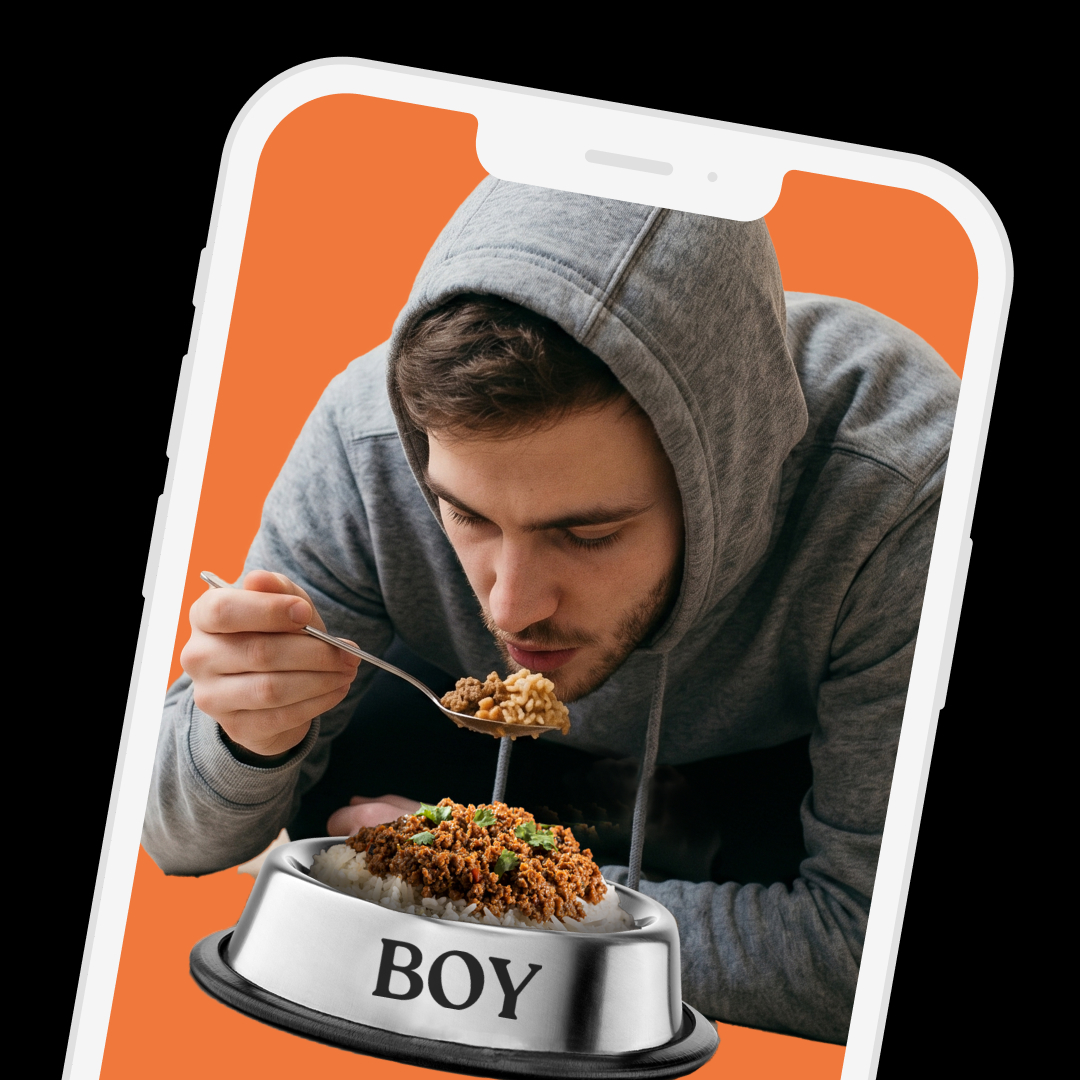
If you’ve managed to avoid it so far, boy kibble is the internet’s name for a deliberately basic, high-protein meal of the blokey variety. Usually some version of mince and rice, maybe hot sauce if you’re feeling fancy. It comes from the protein-maxxing corner of the internet, where gym culture overlaps with the manosphere.
The meal itself is not new. Bodybuilders, meal-preppers and gym bros have been eating beige food out of containers for years.
What’s new is the label.
More than meat and rice
Boy kibble is more than just a name for a meal. It packages a behaviour.
It takes something repetitive, joyless and highly functional, then gives it a wrapper, a personality and a point of view. Suddenly, meal prep isn’t just efficient. It’s ironic. It’s self-aware. It’s something you can post.
Here, blandness isn’t a flaw. It’s part of the appeal.
The whole thing signals utility over pleasure, discipline over indulgence, function over fuss. It turns a small act of self-optimisation into something culturally legible.
A lot of that work sits in the word boy.
As a riff on Girl Dinner, the internet’s name for a cobbled-together, low-effort meal, it softens the behaviour with humour. It makes the whole thing feel playful, even ridiculous, which helps because underneath the joke is a familiar script: protein, routine, efficiency, minimal fuss. Keep it functional. Keep it moving.
It also works as a quick signal of belonging. It says: I’m this kind of guy. I eat for function. I care about gains. I’m not here for a beautifully plated lunch with micro greens.
That’s part of why it travels so well. It doesn’t just describe the meal. It signals a set of values and a subculture people can recognise instantly.
Where culture kicks in
It gets more interesting when you look at it through the Cultural Frame.
At Keep Left, we talk about culture as the thing that shapes how people see the world, and how they see themselves in it. Which means it should shape the way brands think about messaging, media and ideas too.
Boy kibble is a gross yet great example.
At first glance, it’s just a brown bowl of mush. But culturally, it’s doing a lot more. It’s a signal about identity, aspiration and a bro-coded worldview that’s easy to recognise and easy to perform.
That’s why it spreads.
Not because it’s especially original. Because it’s frictionless.
The format is simple. The joke is built in. The meaning is carried in the label. A bowl, a deadpan caption, a nod to macros or gains, then off it goes into the algorithmic slipstream.
This isn’t really one meal hack. It’s a repeatable content format.
And repeatable formats tend to move when they let people do two things at once: express something about themselves and affiliate with a group without much effort.
How the joke does the work
The lesson here isn’t that brands should lean into the male-coded part of it. It’s not even really about protein.
It’s about how ideas move in culture.
Useful behaviours travel further when they give people a way to signal who they are and where they belong.
People are drawn to things that make everyday life easier. But usefulness alone rarely gets remembered, shared or repeated. What gives a behaviour momentum is when it arrives in a form people can recognise, perform and pass on.
That’s where the joke comes in. It doesn’t just make the behaviour funnier. It makes it easier to clock, easier to share and easier to join.
Back to protein
You can see that in protein, which has outgrown gym culture and the language of macros. For some people, it’s shorthand for health, function, convenience and having your life together.
That’s what makes boy kibble more than just a protein joke.
What looks like a bowl of beige slop is a reminder of how ideas spread.
Make life easier.
Give it a point of view.
Wrap it in an identity people want to try on.
And give them an easy way to show they belong.
That’s when boring behaviour starts to travel.
Even if it does look like a dog’s breakfast.
Thanks for reading
This is the kind of thing that gets our brains bubbling at Keep Left: not just what’s trending, but what the trend reveals about identity, behaviour and the way culture helps ideas travel.
That’s the Cultural Frame in action.
Read more about our thinking on the Cultural Frame, or get in touch if you want to turn cultural signals into sharper comms, stronger ideas and work people actually choose.
Until then, Keep Left.